When a Paid-Off Home Still Feels Like a Monthly Bill
By: Caleb Mercer
From the fictional town of Cedar Valley, where characters from Quiet Echo continue to respond to real-world events.
Property tax fights in Florida and several other states hit the news this week, raising a simple question many folks whisper but few say aloud: Why does a family still pay every year for a home already paid off?
Homeowners in Florida could soon vote on several proposals aimed at reducing or even removing property taxes for family homes. That conversation mirrors one beginning here in Cedar Valley, where rising assessments and steady bills weigh on families who already feel squeezed.
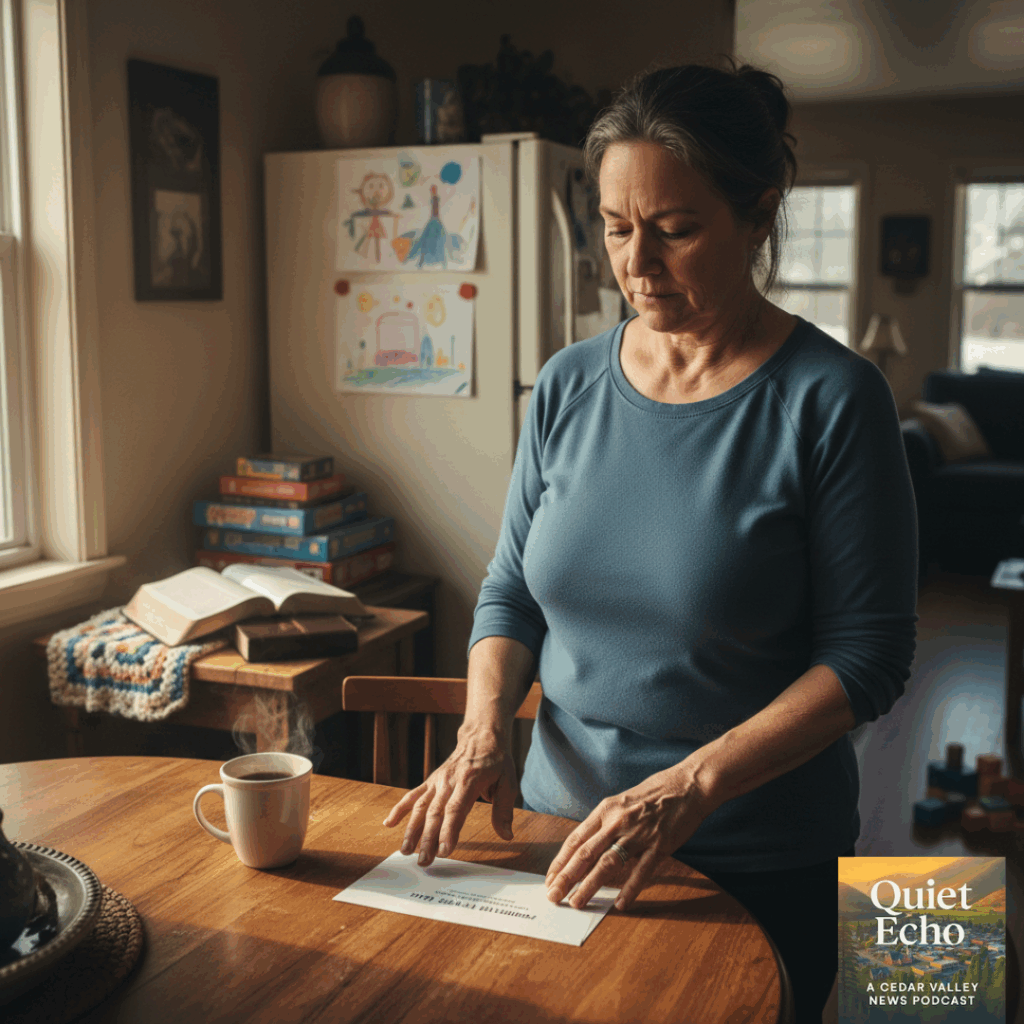
Some mornings bring back memories from darker days in my own house. I remember sitting at our kitchen table, staring at a tax notice after losing my factory job. I’d worked two decades without missing a shift, served my country, paid my bills, and cared for my wife and children as best I could. Even so, a piece of paper in the mail made me feel like I no longer had a place in my own home.
Those days passed, and our town healed along with my family. My carpentry shop grew. My marriage grew stronger. Faith took root. Still, I never forgot that feeling—sitting in quiet panic, unsure how we’d stretch one more dollar. I know many of our neighbors feel versions of that same pressure.
That’s why this national debate matters. It isn’t about politics. It’s about dignity. A home should offer shelter and safety. It shouldn’t feel like a bill you never escape. Florida lawmakers say families need relief. Critics say local services need stable funding. Both speak some truth.
Here in Cedar Valley, we have a chance to think with more care than noise. We know our seniors live on fixed incomes. We know young families scrape through the early years. We know some neighbors live in houses left to them by parents, homes soaked in memory. A yearly tax may not sound like much to a legislator looking at spreadsheets, but it weighs heavily on families trying to preserve heritage and stability.
I’m a carpenter, not an economist. I measure problems by the faces they touch. Every Saturday our living room fills with men and women seeking fellowship, prayer, and encouragement. Many have told me they worry about losing what they worked for, even though they already paid for every board and nail. Their concern doesn’t come from greed. It comes from fear. Once you lose a home, you never fully shake the memory.
Maybe Cedar Valley can study a better way. Maybe we can protect schools and emergency services while easing pressure on families who carried this town through hard years. Maybe we can keep homes in families instead of forcing sales through rising bills.
I don’t pretend to have all answers. I only know what it feels like when a home doesn’t feel secure. I know what relief feels like when stability returns. If we can offer that relief to our neighbors, we should talk about it with open minds and open hearts.
No shouting. No dividing lines. Just honest conversation about what kind of town we want to be.
In Cedar Valley, healing came when we listened kindly and carried one another’s burdens. We can do the same with this issue. A home ought to feel like a blessing, never a burden.
This editorial is part of the fictional Cedar Valley News series. While the people and town are fictional, the national events they reflect on are real.
It’s free, live, and fresh! Quiet Echo—A Cedar Valley News Podcast is live on Apple Podcasts: https://bit.ly/4nV8XsE, Spotify: https://bit.ly/4hdNHfX, YouTube: https://bit.ly/48Zfu1g , and Podcastle: https://bit.ly/4pYRstE. Every day, you can hear Cedar Valley’s editorials read aloud by the voices you’ve come to know—warm, steady, and rooted in the values we share. Step into the rhythm of our town, one short reflection at a time. Wherever you listen, you’ll feel right at home. Presented by the Readers and Writers Book Club: https://bit.ly/3KLTyg4